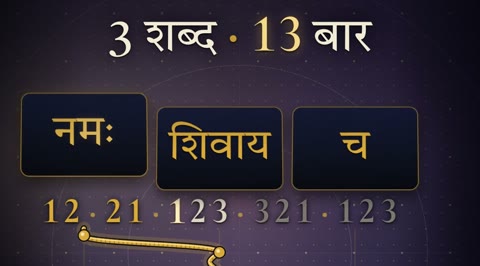

Salutation to Śiva, who is the syllable na: who wears the king of serpents as a garland, of the wondrous eyes (sung today as trilocanāya, “the three-eyed”), whose body is dusted with sacred ash, the great lord; eternal, pure, clothed only by the directions.
ज्यांच्या गळ्यात सर्पराजाचा हार आहे, ज्यांचे डोळे विलक्षण आहेत (आज ‘त्रिलोचनाय’ म्हणजे तीन डोळ्यांचे, असे म्हटले जाते), भस्म हाच ज्यांचा अंगलेप आहे, जे महेश्वर आहेत; जे नित्य, शुद्ध आणि दिगंबर आहेत, त्या ‘न’काररूप शिवाला नमस्कार.
जिनके कंठ में सर्पराज का हार है, जिनके नेत्र विलक्षण हैं (आज ‘त्रिलोचनाय’ यानी त्रिनेत्र गाया जाता है), भस्म ही जिनका अंगराग है, जो महेश्वर हैं; जो नित्य, शुद्ध और दिगम्बर हैं, उन ‘न’कार-स्वरूप शिव को नमस्कार।
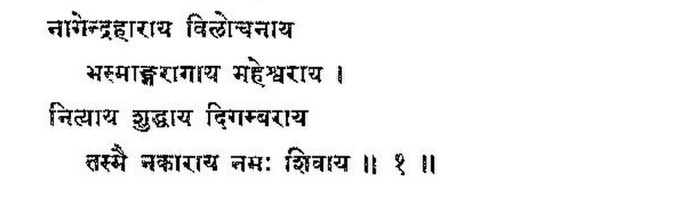
Salutation to Śiva, who is the syllable ma: anointed with the waters of the Mandākinī and with sandal paste, the great lord who rules Nandī and the pramatha hosts, worshipped with mandāra and countless other flowers.
जे मंदाकिनीच्या पाण्याने आणि चंदनाने चर्चित आहेत, जे नंदीश्वर आणि प्रमथगणांचे स्वामी महेश्वर आहेत, ज्यांची मंदार आणि इतर अनेक फुलांनी पूजा होते, त्या ‘म’काररूप शिवाला नमस्कार.
जो मंदाकिनी के जल और चंदन से चर्चित हैं, नंदीश्वर और प्रमथगणों के स्वामी महेश्वर हैं, मंदार और अनेक पुष्पों से पूजित हैं, उन ‘म’कार-स्वरूप शिव को नमस्कार।
Verse 2 is in a different metre from the rest (vasantatilakā, 14 syllables a line). In the 1910 print all four lines scan; the popular shortened refrain does not.
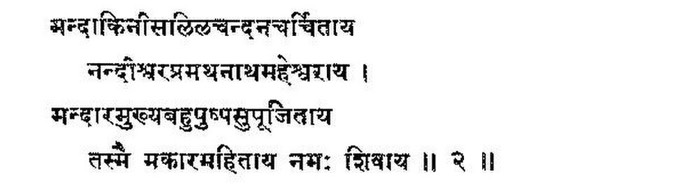
Salutation to Śiva, who is the syllable śi: the auspicious one, a sun to the cluster of lotuses that is Gaurī’s face, destroyer of Dakṣa’s sacrifice, the blue-throated one whose banner bears the bull.
जे कल्याणरूप आहेत, गौरीच्या मुखकमलांना फुलवणारे सूर्य आहेत, दक्षाच्या यज्ञाचा नाश करणारे आहेत, जे श्री नीलकंठ आहेत आणि ज्यांच्या ध्वजावर वृषभ आहे, त्या ‘शि’काररूप शिवाला नमस्कार.
जो कल्याणस्वरूप हैं, गौरी के मुखकमलों को खिलाने वाले सूर्य हैं, दक्ष के यज्ञ का नाश करने वाले हैं, जो श्री नीलकंठ हैं और जिनकी ध्वजा पर वृषभ है, उन ‘शि’कार-स्वरूप शिव को नमस्कार।
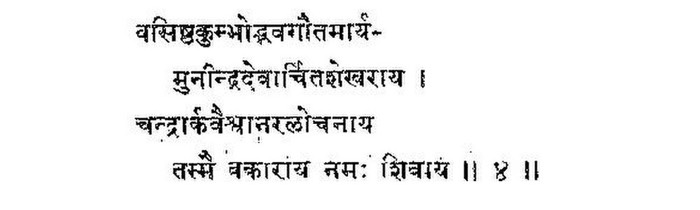
Salutation to Śiva, who is the syllable va: whose crown is worshipped by Vasiṣṭha, Agastya, Gautama and the greatest sages and gods, whose eyes are the moon, the sun and fire.
वसिष्ठ, अगस्त्य, गौतम अशा श्रेष्ठ मुनींनी आणि देवांनी ज्यांच्या मस्तकाची पूजा केली आहे, चंद्र, सूर्य आणि अग्नी हे ज्यांचे डोळे आहेत, त्या ‘व’काररूप शिवाला नमस्कार.
वसिष्ठ, अगस्त्य, गौतम आदि श्रेष्ठ मुनियों और देवताओं ने जिनके मस्तक की पूजा की है, चंद्र, सूर्य और अग्नि जिनके नेत्र हैं, उन ‘व’कार-स्वरूप शिव को नमस्कार।
The margin shows वा as in नमः शिवाय. The verse says वकाराय with a short va, because the metre needs a short syllable there.
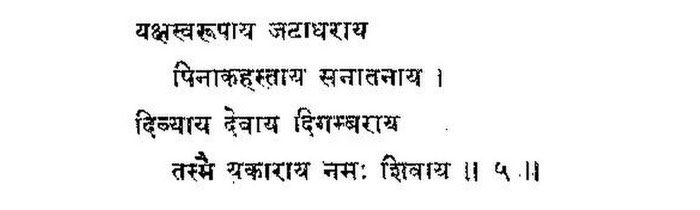
Salutation to Śiva, who is the syllable ya: who takes the form of the yakṣa (many texts read “whose form is the sacrifice”), who wears matted locks and holds the bow Pināka, the everlasting, the shining god, clothed only by the directions.
जे यक्षाचे रूप धारण करतात (अनेक पाठांत: यज्ञस्वरूप), जे जटाधारी आहेत, ज्यांच्या हातात पिनाक धनुष्य आहे, जे सनातन आहेत, जे दिव्य देव आणि दिगंबर आहेत, त्या ‘य’काररूप शिवाला नमस्कार.
जो यक्ष-रूप धारण करते हैं (कई पाठों में: यज्ञस्वरूप), जटाधारी हैं, हाथ में पिनाक धनुष रखते हैं, सनातन हैं, जो दिव्य देव और दिगम्बर हैं, उन ‘य’कार-स्वरूप शिव को नमस्कार।
फलश्रुति
बाद में जोड़ा गया पद
पञ्चाक्षरमिदं पुण्यंयः पठेच्छिवWhoever recites this sacred hymn of five syllables near Śiva reaches Śiva’s world and rejoices with him.
जो शिवाच्या सान्निध्यात हे पवित्र पंचाक्षर स्तोत्र म्हणतो, तो शिवलोकाला जातो आणि शिवासह आनंदात राहतो.
जो शिव के सान्निध्य में इस पवित्र पंचाक्षर स्तोत्र का पाठ करता है, वह शिवलोक को प्राप्त करता है और शिव के साथ आनंदित होता है।